Jam Session 🍒 - Anaerobic Natural - Pacamara
Jam Session 🍒 - Anaerobic Natural - Pacamara
Couldn't load pickup availability
Colombia, Finca Las Marías 🍫🍷
Flavor notes: Dark cherry · Cocoa nibs · Anise · Red wine · Creamy finish
This coffee has depth and reminds us of a liquid dark dessert with some grown-up character. You get bitter cacao nibs and concentrated, baked cherries, but just when it threatens to get too heavy, a spice note of anise breaks through. A little unexpected, but everyone is welcome. The aftertaste is dry and a little grippy, like a good Pinot Noir, with good complexity.
It's a layered coffee that has some funk to it, so be prepared for that in the best of ways.
Process 🧪
- Pacamara variety
- 200-hour natural anaerobic fermentation with temperature control
- Fermentation cycle: 48hrs room temp → 24hrs cooling room (10-15°C) → repeat 3 times
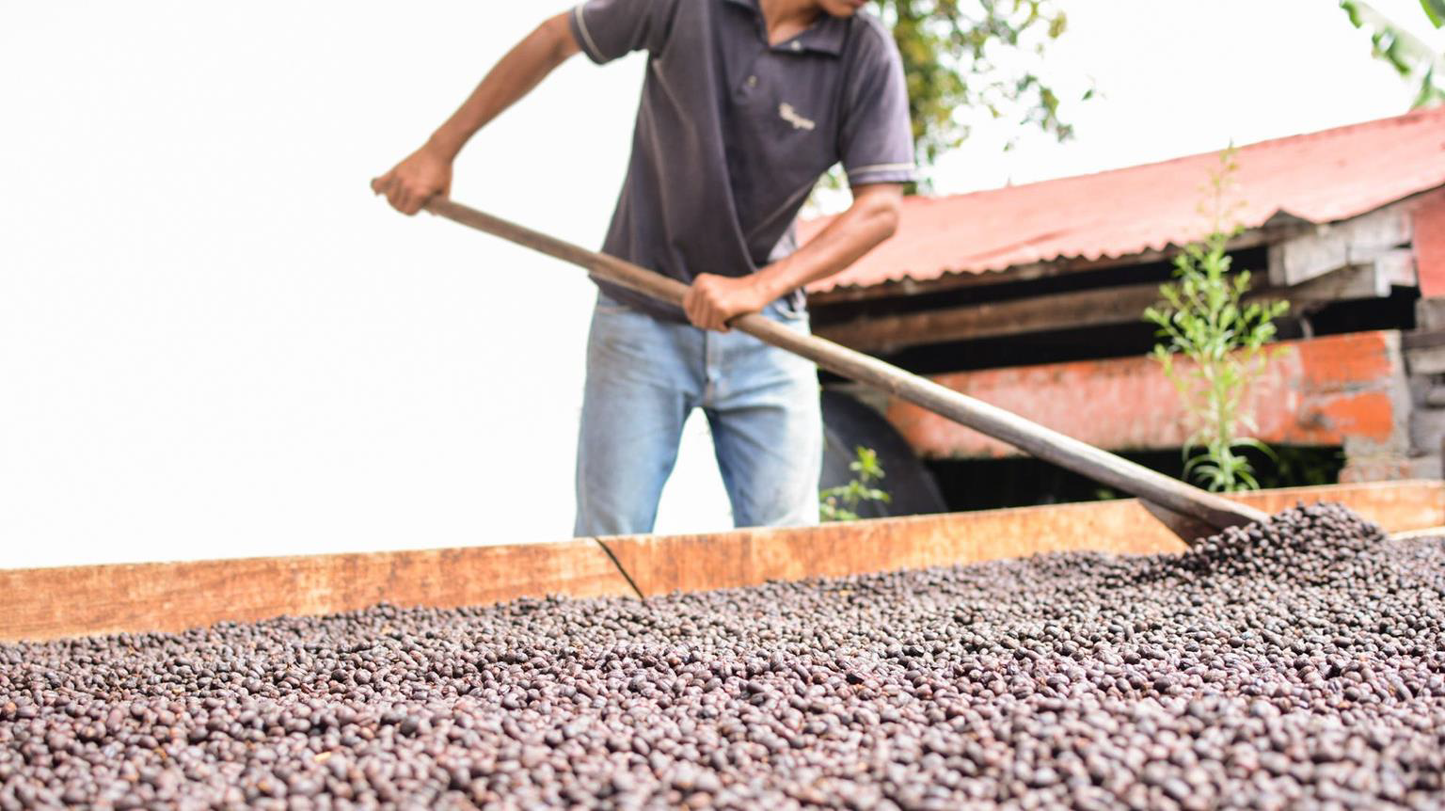
- Sun-dried on African raised beds
- Hand-sorted twice
- 2 months temperature-controlled storage
About the temperature cycling:
Here's the difference: most natural process coffees get put on raised beds, ferment and dry in the sun for a few days, done.
This one went through a whole thing. Ferment for 48 hours at room temperature. Move the cherries to a cooling room (10-15°C) for 24 hours. Back to room temp for 48 hours. Back to cooling for 24 hours. Back to room temp for 48 hours. Back to cooling for 24 hours one final time, in total 200 total hours.
The reason this matters is that temperature affects fermentation speed and what flavor compounds develop. Room temperature fermentation creates certain compounds. Cooler fermentation creates different ones. Cycling between them builds complexity you don't get from fermenting at steady temperature the whole time.
It's a specific protocol aimed at creating a specific flavor profile, which is pretty different from "we've always done it this way" farming and we're happy to got our hands on this.
About the farm
José Julián Giraldois a third-generation producer who has turned Finca Las Marías (Pijao, Quindío) into a high-altitude laboratory. At 1,750-2,050 masl, he manages over 10 experimental varieties, including Gesha, Sidra, and Pacamara, with a focus on expressive cup profiles.
The farm Las Marías is very precise, almost like a lab in the mountains. Most Colombian farms don't have cooling rooms, they ferment at ambient temperature because that's what's available. Las Marías has the infrastructure to mess around with temperature control, then actually used it to run 200-hour cycling protocols on Pacamara.
Rather than relying on tradition, José uses a methodical approach:
-
Selective breeding: Every seed is cupped and tested for quality and productivity before planting.
-
Brix-Led harvesting: Pickers harvest based on sugar content (Brix) rather than just color, ensuring the raw material is optimized for fermentation.
-
The lab: Processing takes place in a climate-controlled environment where pH, temperature, and oxygen levels are strictly manipulated.
Why Pacamara:
Pacamara beans are genuinely huge, a hybrid of Pacas and Maragogipe varieties. They're expressive, they cup well, and their size means they can handle extended fermentation without falling apart.
José picked Pacamara specifically for this temperature cycling experiment because the variety's natural characteristics (chocolate, creamy body, balanced acidity) would work well with the process rather than getting overwhelmed by it.