Tea Time 🍵 - Yeast Inoculated - Nyasaland, SL14, and SL28
Tea Time 🍵 - Yeast Inoculated - Nyasaland, SL14, and SL28
Couldn't load pickup availability
Reminds us of: Earl Grey · Red Currant · Toffee
This coffee has earl gray tea florals, sticky toffee sweetness and this black currant brightness and aftertaste reminding a bit of dark chocolate in there. It's delicate and expressive at the same time.
It's an interesting coffee considering that they called a beer yeast company and asked if they could borrow some yeast samples for a coffee experiment (they said yes).
Details and Process
- Nyasaland, SL14, and SL28 varieties
- 100-hour cherry fermentation
- 40-hour submerged fermentation with commercial brewing yeast (Fermentis S-series)
- 234 smallholder farmers
- 1,800-2,200 mas
Process
The Coffee Gardens in Uganda wanted to try something different. Most Ugandan coffee gets processed the traditional way, ferment for a day or two, wash, dry, done. Works great, tastes good and reliable, nobody's complaining.
But The Coffee Gardens rebuilt their entire washing station in 2022 and apparently decided "we have all this new infrastructure, let's do something fun with it."
So they contacted Fermentis, the company that makes yeast for brewing beer and wine, and basically said "can we have some samples to mess around with coffee fermentation?"
Fermentis said yes (probably intrigued), sent them four different yeast strains, and The Coffee Gardens went full science experiment mode.
This lot did 100 hours fermenting in cherry, then pulped, then another 40 hours submerged with commercial brewing yeast doing whatever brewing yeast does to coffee.
The process is the result of a first-of-its-kind collaboration with the yeast experts at Fermentis to prove that experimental fermentation can be both wild and incredibly clean.
About the farm
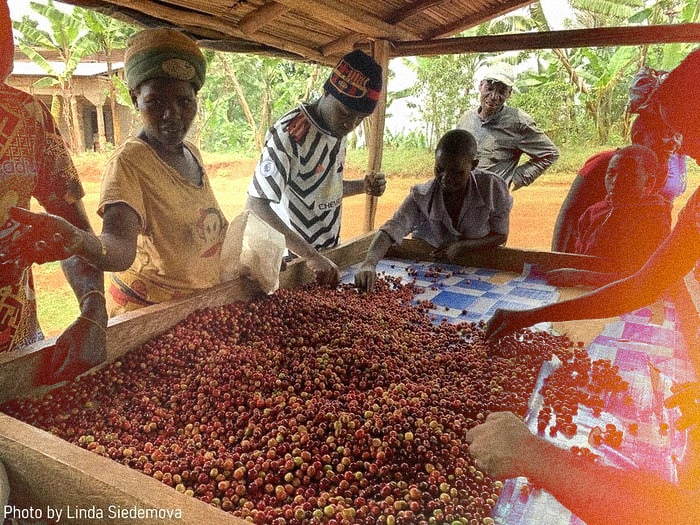
234 smallholder farmers around Mt. Elgon grow this coffee, then haul it down the mountain to "The Coffee Gardens" washing station themselves, earning extra income for the work beyond just selling cherries.
The Coffee Gardens was established in 2017 specifically to produce specialty coffee ethically with direct transparency between farmers and consumers. In 2022 they literally dismantled their entire old washing station and rebuilt it at a new site to expand capacity and have the infrastructure for experiments.
Then they contacted Fermentis (the brewing yeast company) and asked if they could run trials. Most coffee operations would just... not do that. The Coffee Gardens decided their whole purpose was to improve farmers' income while making exceptional coffee, so why not try fermenting with beer yeast?
They pay farmers 59.5% of the price while Industry standard is 20-30%.
The farmers bringing coffee down the mountain themselves get paid for that work too. It's a pretty different approach from the usual "farmers grow, we buy cheap, we process, we profit" model.
This is their first season testing yeast fermentation. They got results good enough to plan more experiments next season. Which means you're drinking version 1.0 of something they're just starting to figure out.