Tropic Thunder 🍹 - Anaerobic Natural - Heirloom
Tropic Thunder 🍹 - Anaerobic Natural - Heirloom
Couldn't load pickup availability
Reminds us of: Passionfruit · Cherry blossom · Dark chocolate · Sticky toffee
Fruity, floral, and a little wild. This is not your classic Ethiopian!
It opens first with ripe passionfruit and mango, and then we get some cherry blossom that shouldn't be invited to this coffee party but we're glad it showed up. Dark chocolate and tamarind toffee funk ending.
We know it doesn't sound like it, but it is from Ethiopia! If you want to taste a different Ethiopian flavor profile, this is great.
Details and Process 🧪
- Origin: Gedeb, Yirgacheffe, Ethiopia
- Producer: Ephtah Specialty Coffee (Lalesa site)
- Variety: Heirloom Ethiopian
- Process: Anaerobic Natural (9-day barrel fermentation)
- Altitude: 2,200 masl
The process:
- 9-day anaerobic fermentation in sealed barrels
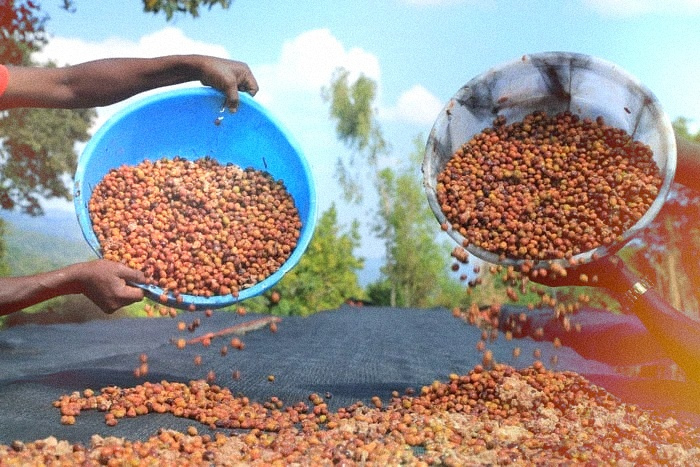
- 13-18 days sun-drying on raised beds
- 2 months temperature-controlled storage before milling
- Total time from cherry to green bean: nearly 3 months
Why this is unusual:
Ethiopia basically invented natural process coffee. Hundreds of years of tradition, proven methods, reliable results. Extended anaerobic fermentation requires infrastructure, investment, and willingness to risk entire batches. It's the kind of experimentation you see in Colombia, where specialty buyers are hunting for wild fermentation profiles and willing to pay for them.
Ephtah looked at that approach and decided to try it in Yirgacheffe. Nine days in sealed barrels, no oxygen in an controlled environment. Then dried for over two weeks on raised beds, and stored for two months before milling.
The whole process is pretty calculated for a region where most producers stick to what works and we are so happy to support and share it with you.
About the farm
Lalesa site, Gedeb - 2,200 masl
This coffee comes from Ephtah's Lalesa site at 2,200 meters above sea level. That altitude matters, coffee develops slower up there, concentrating sugars and complexity. The temperature swings between day and night are bigger. Everything about high-altitude coffee is more intense.
The site is 3.5 hectares of their own land with 350 drying beds. Ephtah bought the land in 2023, built the infrastructure by September, and immediately started running fermentation experiments that most Ethiopian producers don't attempt.
The coffee grows under shade trees, primarily Ensete (false banana tree). The shade slows cherry development even more, which at this altitude means you're getting fruit that took its time getting ripe. Slower ripening = more concentrated flavors = better raw material for extended fermentation.
Why Ephtah can do this:
Most Ethiopian producers can't risk 9-day barrel fermentation. One contamination and you've lost an entire batch. Ephtah owns their land, built their own processing infrastructure, and has the resources to experiment. They can afford to try what Colombia does.
That's why this coffee exists and why these experimental lots are small. They might run similar experiments next harvest, or they might try something completely different. Extended fermentation lots don't repeat predictably, each harvest is its own thing.